Monday, August 26, 2019

Punch Out Powdery Mildew On Cannabis

Powdery mildew (PM) is made up of many fungal pathogen species that attack and thrive off healthy, living plant tissue. Golovinomyces sp. (aka Erysiphe sp.) is the most common PM species that growers find on cannabis today. We recognize PM as producing a distinctive white sporulation on the foliage that looks like powdered sugar. Without proper management through chemical and cultural practices, this pathogen can quickly spread throughout your operation and decrease crop quality.


Powdery mildew forms white spores on the surface of the foliage.
Conditions ideal for PM proliferation include moderate temperatures, dry leaf surfaces, and high humidity. Unfortunately, the optimal temperatures for PM go hand-in-hand with the ideal temperatures for cannabis production and keeping a dry leaf surface is needed to prevent other diseases such as Botrytis from developing. Thus, growers should prioritize the management of their relative humidity levels to prevent PM. A constant humidity level of 55-60% in the canopy (65-75% if using predatory mites) is preferable to excessively high humidity (>85%). Growers can maintain adequate humidity within the plant canopy with appropriate HVAC equipment in conjunction with horizontal airflow fans (HAF) or vertical airflow fans (VAF).


Powdery mildew should not be mistaken for trichome production
As for all diseases, sanitation is key to prevention, and it is important to sanitize your production
areas between crops. Following physical removal of debris, the first step is to clean all hard surfaces using a cleaning product such as Strip-It (for greenhouses) or Horti-Klor (for warehouses)*. Once surfaces have been cleaned, use a sanitizing agent such as KleenGrow (rinse direct crop contact surfaces with potable water), ZeroTol 2.0 or SaniDate 5.0 for disinfection purposes*. It is critical to ensure that all cuttings and clones coming into a new production area are free of disease. Immediately remove any infected foliage and dispose of it properly. Replace gloves and other protective equipment after handling infected material. Work in infected areas late in the day and avoid staff moving back into clean areas from infected areas.

EPA registered and 25(b) products need to be approved for use on cannabis by the regulatory agency in the state in which the product would be used. When using biofungicides, best practices call for application of ZeroTol 2.0 before Cease or Triathlon BA to destroy surface spores of the pathogen on contact while the biofungicide protects uninfected tissue. Contact your Griffin sales person or GGSPro for product rates and application intervals.


Product NameItem Number
25(b) Products
Procidic 2
71-2742
EPA Registered Products
Cease
71-13301
Companion
71-1375
Horti-Klor
74-2105
KleenGrow
74-21101
MilStop
71-2879B
Regalia CG
70-2841
SaniDate 5.0
71-35001
Sil-Matrix
71-2940
Strip-It Pro
74-2125
Triathlon BA
71-3040
ZeroTol 2.0
71-35501

*Check state approval status for these products.
Printable version

Monday, July 29, 2019

Getting More From Your Cleaners and Sanitizers With Foam

All food and medicinal crop growers take great care to keep their production spaces clean. Often, this process involves a full sanitation protocol for the production space at the end of a crop cycle to reduce the risk of carryover pests and pathogens. The complete process involves four steps: Physical cleaning (remove the debris), chemical cleaning, rinsing with clear water and sanitizing.

It’s important to include the physical and chemical cleaning steps in the process prior to sanitizing. Favorite sanitizers, including ZeroTol 2.0, SaniDate 5.0 and Kleengrow, treat the surfaces they contact. If the surface is dirty, the sanitizers will treat the debris, but not penetrate to the surface below. If the sanitizer can’t contact the surface, the surface can’t get clean!

We can all increase the efficacy of our cleaners and sanitizers by utilizing the power of foam. Foaming makes the application more effective by increasing coverage and contact time. Foams also make it a lot easier to see where treatments have been applied.

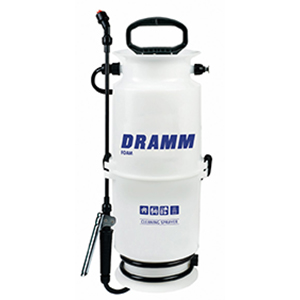
Griffin offers two great foamers from Dramm to get this job done. With both small and large volume options, growers can have the right tools for all needs, from large greenhouses spaces to smaller warehouse production rooms. The Foam8L is a 5 liter compression foamer that is highly portable and great for small spaces. Expect to treat 400-500 sq ft from one full tank. For larger spaces, turn to the FM20-30 foamer. This cart unit has a 20 gallon tank, a 30 foot hose and runs on compressed air*. Both products are compatible with popular cleaners and sanitizers.

 Ask your Griffin sales person for a bulletin outlining GGSPro’s recommendations for hard surface sanitation for food and medicinal crops. Your sales person can help you choose the right cleaner and sanitizer for your situation and will let you know if you need to add a foaming agent to the tank


Dramm Compression Foamer 8L Tank - $157.59
No 74-2688

Buy Now

Dramm Foamer FM 20-30 Aire Powered 20gal Tank - $1,485.26
No 74-2689

Buy Now

*Compressed air source required for the FM20-30 Foamer
Printable version